Cao Rui
The Romance of the Three KingdomsCao Rui is Cao Pi’s son and the successor whose reign carries the Kingdom of Wei from its founding generation into the political struggles surrounding the young Cao Fang. His rule is marked by a consequential misjudgment of Sima Yi, dependence on powerful advisers, and an extravagant building program that the narrative sets against warnings of dynastic decline. Before dying at thirty-six, Cao Rui entrusts his heir to both Cao Shuang and Sima Yi; the arrangement does not prevent Cao Shuang from later taking control for himself.
Identity and Inheritance
Cao Rui is the son of Cao Pi and Lady Zhen, Cao Pi’s first wife and empress. The account of his childhood is inseparable from palace intrigue: Lady Zhen was killed after Cao Pi fell dangerously ill and Lady Guo, seeking to become empress, blamed her for witchcraft. Cao Rui was then raised by the new empress, who had no children of her own. His family history thus places him within the consequences of a succession struggle before he comes to the throne.
Cao Pi’s death in the autumn of 226 ends a seven-year reign and makes Cao Rui emperor of Wei. Before dying, Cao Pi gathers Cao Zhen, Chen Qun, and Sima Yi at his bedside and charges them with helping his son rule and mature. Cao Rui’s accession initially appears to continue that arrangement: senior supporters of the dynasty retain formal responsibilities, while Sima Yi receives his requested appointment as governor of Xiliang and the western regions.
Rule and Suspicion of Sima Yi
Cao Rui’s authority is tested when a false proclamation appears on the main gate of Yecheng. It claims that Cao Cao had originally intended Cao Zhi to succeed him, depicts Cao Rui as lacking virtue, and asserts that Sima Yi must overthrow the ruler to fulfil Heaven’s and the people’s wishes. The forged text turns a political question about Sima Yi’s power into an apparent challenge to Cao Rui’s legitimacy.
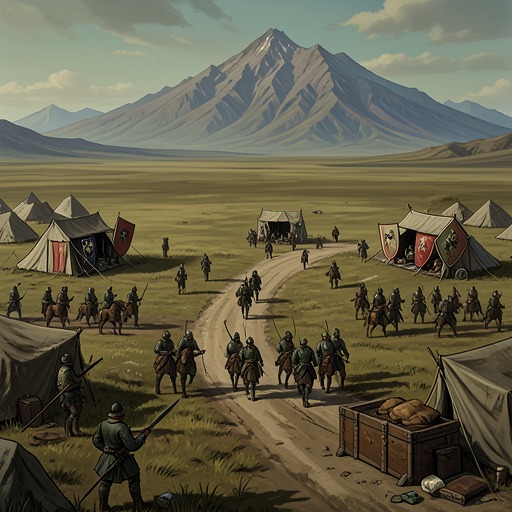
The court argues over whether to act against Sima Yi or dismiss the proclamation as a plot. Cao Rui goes to Anyi with one hundred thousand soldiers, where Sima Yi is to receive him officially. Sima Yi brings thousands of troops to greet the emperor, intending to show respect; Cao Rui instead confronts him with the charge of rebellion. Sima Yi denies the accusation and orders his forces to withdraw, but the display does not satisfy the court. On Hua Xin’s advice, Cao Rui strips Sima Yi of his post, sends him back to his ancestral village, and transfers his army to Hua Xin.
The decision affects the balance of power beyond the Wei court. Kong Ming, fearing an invasion while Sima Yi commands troops, welcomes his dismissal and persuades the ruler of Shu to begin a northern campaign. Later, when the loss of Chencang and the death of Hao Zhao alarm Cao Rui, he summons Sima Yi for counsel and restores his standing. Sima Yi advises him to focus on Shu rather than Wu, reasoning that Wu’s movements are tied to its alliance with Shu and that Kong Ming is intent on avenging Jieting and taking territory in the south. Cao Rui promotes Sima Yi to the highest command. The contrast is telling: the emperor first acts on a forged accusation, then relies on the very commander he had disgraced when the military danger becomes immediate.
War and the Reach of Wei
Cao Rui authorizes Xiahou Mao to lead the defence against Shu’s first major northern advance. Xiahou Mao seeks the appointment partly to avenge his father, Xiahou Yuan, who died when Xuande captured Hanzhong. His marriage to Cao Rui’s sister also connects the command decision to the ruling family. Although court officials question his lack of experience against Kong Ming, Xiahou Mao rejects their criticism, and the objection is silenced.
The campaign puts pressure on Cao Rui’s leadership through news arriving in succession: Kong Ming’s forces have crossed the border, Zhao Zilong and Deng Zhi lead the vanguard, and Shu’s army numbers three hundred thousand. Cao Rui must contend not only with the enemy advance but with the choices of his own commanders. His recall of Sima Yi after the fall of Chencang shows how the military crisis reverses the earlier court decision, elevating experience and strategic judgment over suspicion.
Court, Construction, and Portents
In Wei, Cao Rui’s rule is also associated with an immense program of palace construction. He orders extravagant halls, towers, and gardens built from costly materials, employing more than thirty thousand men on his projects alone. Officials submit memorials warning that the work diverts the country’s resources and labour. Cao Rui angrily rejects their remonstrations; one official pays for his challenge with his life.
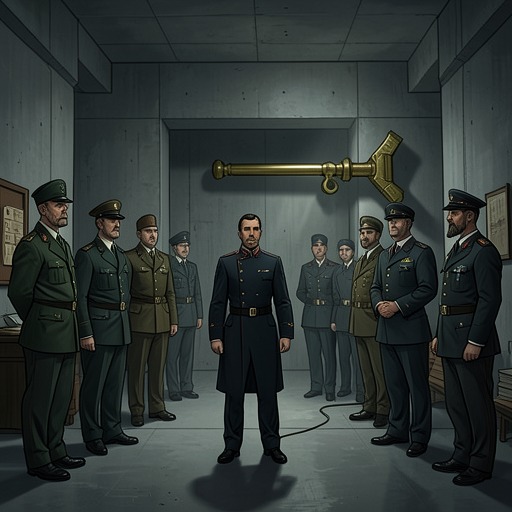
The most charged project is the removal of an ancient bronze statue in Chang’an. Its bowl, held atop a high bronze pillar, was believed to gather morning dew that could become an elixir of life when mixed with jade. Cao Rui wants it for his new palace. The work of dismantling the monument is accompanied by inauspicious signs, yet the account stresses that these do not change his course. An official invokes the simple homes of exemplary ancient rulers and contrasts them with the lavish palaces associated with rulers whose dynasties fell, but Cao Rui ignores the warning. The episode makes the pursuit of longevity and splendour politically ominous: the emperor seeks a legendary life-giving object while disregarding arguments about the historical costs of extravagance.
Death and the Regency
Cao Rui falls ill in Chang’an after, according to the narrative, being visited by the ghosts of an empress he had made commit suicide and of attendants he had killed. As he recognizes that his life is nearing its end, he appoints his relative Cao Shuang regent because his designated heir, Cao Fang, is only eight. He also summons Sima Yi and gives him a share in caring for the young ruler. Cao Rui has the boy brought before him and tells him to trust both men. Cao Fang clings to his father and weeps as Cao Rui dies.
Cao Rui’s death closes a reign of thirteen years. The shared regency is intended to protect the child emperor, but it leaves authority divided between Cao Shuang and Sima Yi. Cao Shuang soon promotes his own followers, builds palaces, takes imperial concubines, and removes Sima Yi’s military command. Sima Yi withdraws and feigns illness. The later struggle grows from the succession arrangement Cao Rui made: his choice places a young emperor under two guardians whose interests do not remain aligned.